 DayPilot
The JavaScript Scheduler includes integrated helpers for precise interaction, readable labels, contextual controls and feedback. They support day-to-day scheduling without filling every event and cell with permanent detail.
Follow the resource and time position
A crosshair highlights the row and column under the pointer, making it easier to trace a slot to its resource and date. Date separators mark the current time, a deadline or another significant date with a vertical line. They can span the grid or apply to a particular resource.
Snap to grid aligns moving, resizing and time-range selection with the timeline cells. Snapping can be configured separately for different operations or replaced with custom interval rules, so the visible scale need not dictate every editing decision.
Keep labels readable while scrolling
Floating event labels follow the visible part of a long event when its start scrolls out of view. This works with ordinary labels and custom DOM, React and Vue content.
Floating time-header text keeps a month or week label within the visible part of its header cell. Sticky parent rows preserve the group context as resource rows scroll.
Place details and controls where they are useful
Active areas add status icons, action buttons, menu triggers and drag handles inside events. They can remain visible, appear only on hover or stay visible on touch devices. This keeps frequent actions close to the booking while secondary commands remain in a menu.
Bubbles show extended details on demand. Context menus provide actions for events and other schedule elements. The common UI overview covers editing, deletion, selection and copying with these controls.
Give feedback without interrupting the board
The integrated message bar can report a save or another application result without opening a modal dialog. Drag shadows and position indicators provide immediate feedback during editing; Pro validation can explain why a proposed position is unavailable.
Automatic scrolling keeps a drag moving beyond the visible area. Together, these helpers let users see the proposed change and its result in the context of the schedule.
Find work and use different input methods
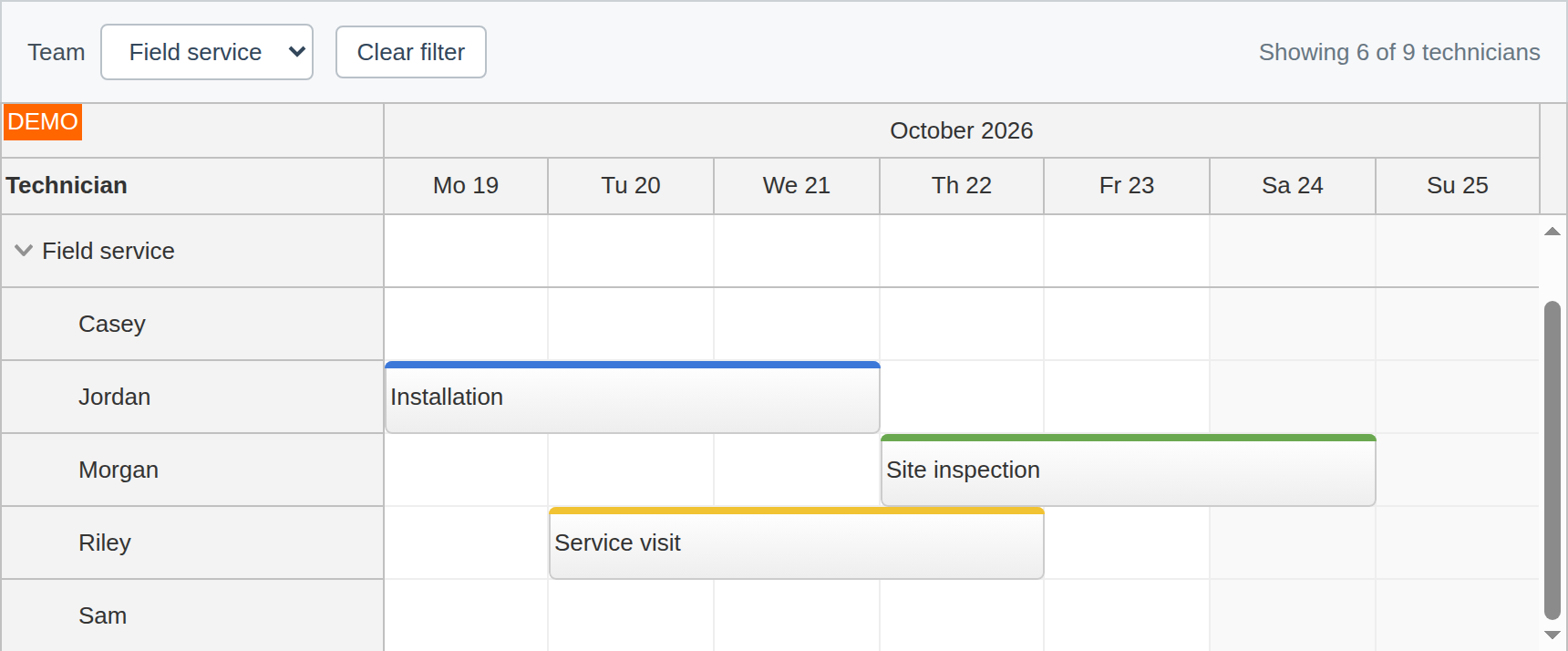
Event filtering narrows the displayed bookings, while row filtering narrows the resources. Application-defined matching supports search, team or status filters on the same board.
In Pro, keyboard navigation supports cell focus, time-range selection and event editing. When the Scheduler has focus, screen-reader descriptions identify the active cell or event, including dates and resource context. Applications can customize these descriptions.
Native touch gestures and touch-visible controls extend the same board to tablets and phones; see the mobile overview.