 DayPilot
The JavaScript Scheduler gives resources more than a name beside a timeline. Rows can display several fields, form expandable groups, load their children on demand, and expose selection, editing, and resource-specific actions. The same resource model can represent people, rooms, machines, vehicles, or other bookable entities.
Resource Header Columns
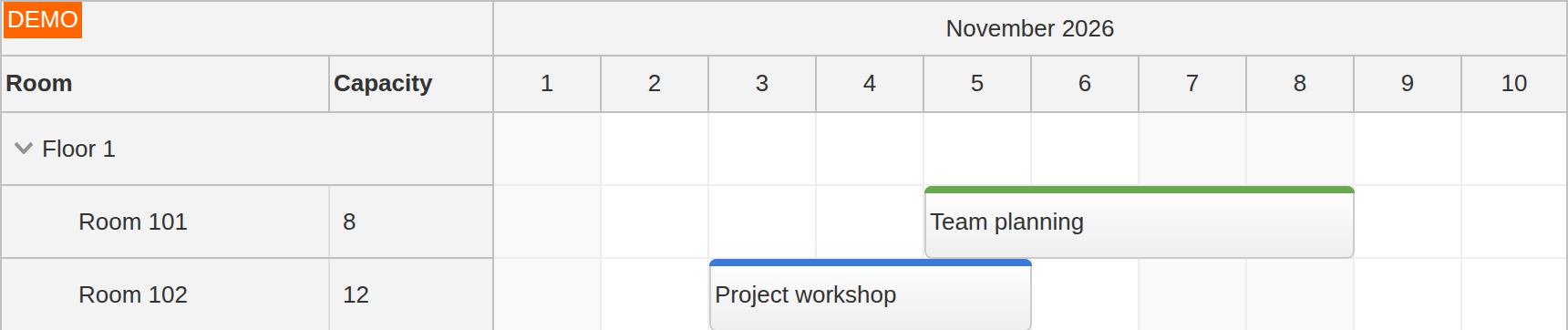
Additional header columns display the information relevant to an assignment: room capacity, a technician's team, equipment type, location, cost, or status. Tabular columns read named fields from the resource data, so the values beside the timeline stay connected to the records your application already uses.
Column titles and widths are configurable. Users can resize columns, sort rows, or scroll wider header content independently of the schedule. Header render hooks can supply calculated values and custom presentation instead of displaying a field directly. A compact resource list can therefore grow into a useful planning table without separating it from the bookings.
Resource Trees and Grouping
A resource tree organizes rows into expandable branches: rooms by floor, staff by department, or machines by production line. Your data defines the hierarchy, and groups can start expanded or collapsed.
Parent rows can be bookable resources or group headings that do not accept bookings. Sticky parents preserve the current group's context while its child rows scroll. Resource fields remain available in the header columns alongside the hierarchy.
In Pro, split resources divide a resource into inline subrows, such as priority lanes for a machine or sections of a venue. The main resource stays grouped in the header while each lane has its own events. Split rows can also sit at the leaves of a resource tree.
Dynamic Resource Branches
Dynamic tree loading supplies child rows when a user expands a branch. A large organization can open with a short list of sites or teams while keeping the rest of the hierarchy available on demand.
This controls loading of the resource records. Event loading is independent, so it can be combined with fetching bookings for the dates and resources in view. The large-data overview explains how these mechanisms work together.
Row Selection and Inline Editing
Row selection gives your application the resource context for commands, detail panels, or filtering. It supports interactions aimed at a person or machine rather than at one booking.
Inline row editing lets users change a resource label directly in the header. The application decides which rows are editable and saves accepted changes. These facilities keep common resource operations close to the plan instead of requiring a separate administration screen for every action.
Custom Resource Information and Actions
Resource headers can carry status icons, menus, and action buttons. A header action might open a resource form, reveal its availability, or move the timeline to its next booking. Working hours and other resource-specific information can also influence cell appearance and scheduling rules.
Resource utilization adds calculated context, such as peak overlapping consumption compared with an application's capacity value. Your application supplies those values and decides whether they are advisory or enforced during booking. The feature matrix identifies the resource features available in Lite and Pro.