 DayPilot
The JavaScript Scheduler includes UI support for everyday booking tasks: creating and editing events, deleting, selecting, copying, displaying details and assigning work. Its menus, inline controls and callbacks let these actions fit the surrounding application.
Create and edit events
Time-range selection supplies the dates and resource for a new event. An event click can open a detail form for an existing booking. Both can use an application-defined editor with fields such as the customer, booking type or required equipment.
Event editing supports full dialogs as well as inline text editing for quick label changes. The Scheduler leaves the record structure and saving logic to your application. The HTML5 Scheduler tutorial demonstrates editing with a backend.
Delete and control available actions
Event deletion can use a built-in delete icon, a context-menu item or a custom button inside the event. Callbacks let the application request confirmation, cancel an operation or connect it to stored data.
Actions can vary by event. Approved work can remain viewable while moving, resizing or deletion is restricted. The same event data can determine which controls appear and how the booking is presented.
Select and copy work
Event selection identifies one or several bookings through clicks or a selection rectangle. The selected set is available to application commands, such as reassignment, approval or a status update, as well as moving or resizing several events together.
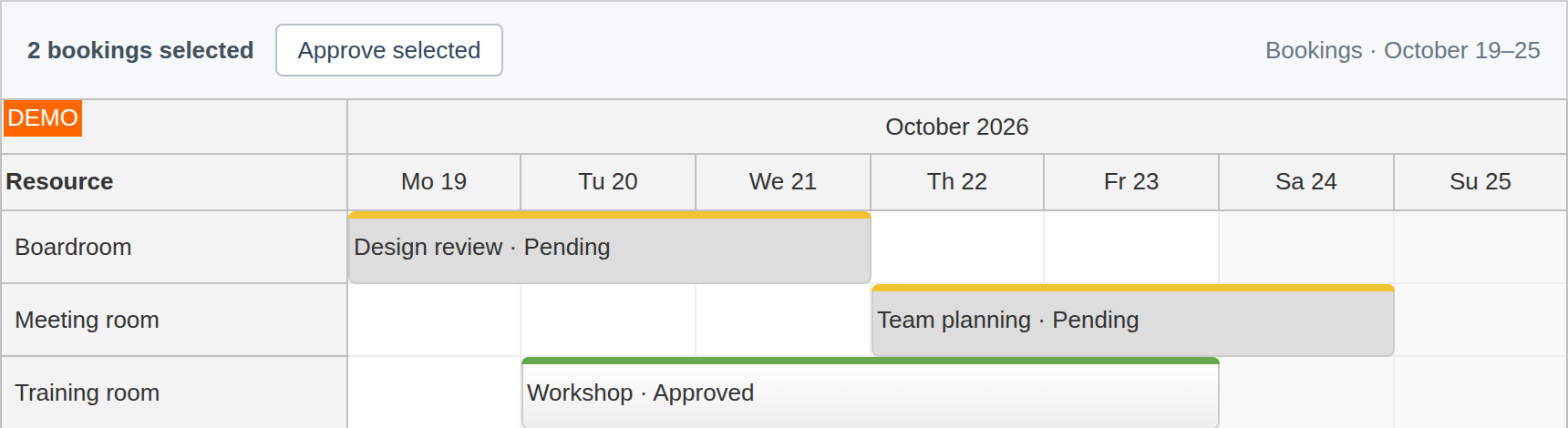
Copy-and-paste and Ctrl+drag copying use the event data and application handlers to create another booking. A copy receives its own ID; the application decides which details and dates to retain.
Offer contextual actions and details
An event context menu groups actions for the booking under the pointer. Menus can offer Edit, Duplicate, Delete or application-specific commands, with icons and submenus. Active areas expose frequently used actions directly in the event.
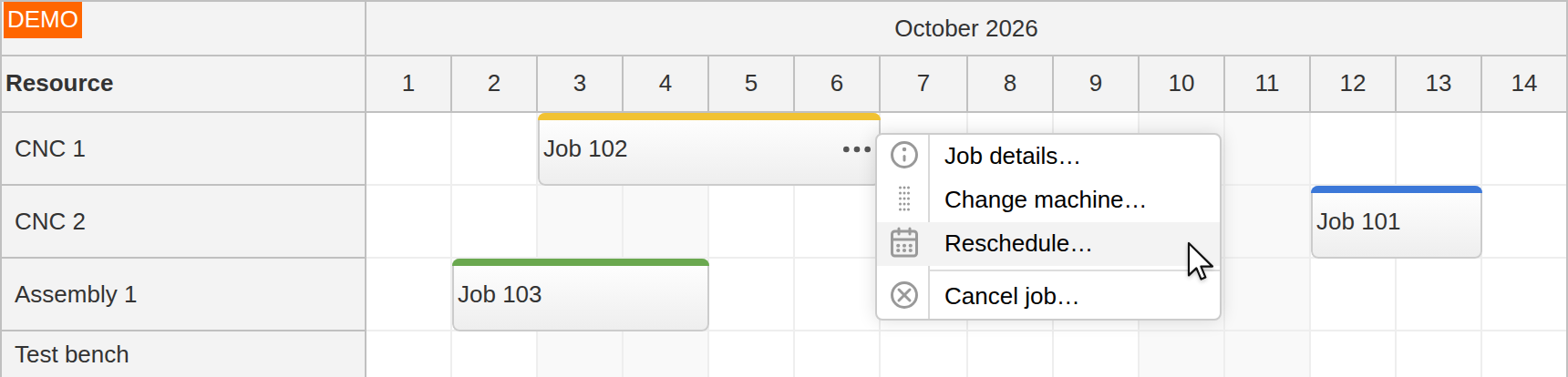
An event bubble shows secondary information without expanding every booking. Its content can be supplied with the event or loaded on demand, including asynchronously from a server. Visible action buttons provide an alternative to hover or right-click on touch devices.
Assign and reschedule events
Moving changes an event's date or resource; resizing changes its duration. External drag and drop brings unscheduled work from an application list or the separate Queue component onto a resource and time.
The drag-and-drop overview covers these interactions and their validation options. User-experience helpers add feedback, position cues and controls that keep the board readable as users work.